
Starting a cafe business requires more than choosing a location and preparing a menu. The right coffee shop equipment supports the preparation, processing, storage, and presentation of coffee and other beverages. Depending on the business model, equipment may range from espresso machines and coffee bean grinder machines to Coffee Roasting Machines, commercial coffee roasters, coffee blending machines, and coffee filling machines.
Equipment requirements can differ significantly between a small café, specialty coffee shop, roasting café, takeaway outlet, and larger coffee production operation. Understanding what each machine does helps business owners plan their workspace, estimate equipment expenses, select appropriate capacities, and avoid unnecessary purchases. A practical equipment plan should consider expected daily volume, menu requirements, available space, workflow, electricity, ventilation, cleaning, and future expansion.
Understanding Coffee Shop Equipment
What coffee shop equipment includes
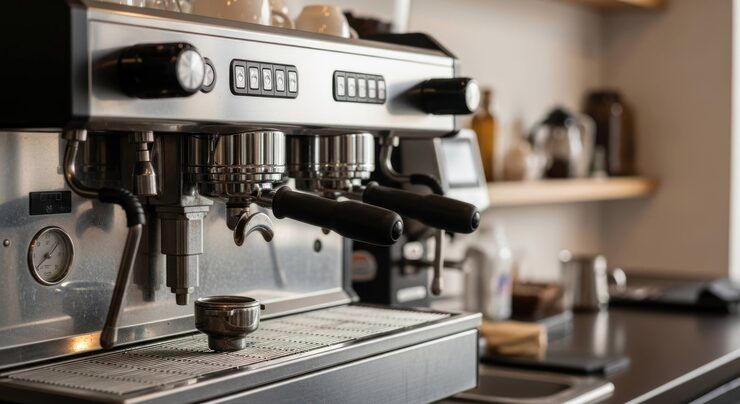
Coffee shop equipment refers to the machines, appliances, tools, and supporting systems used to prepare and handle coffee and related products. Some equipment is used directly at the beverage counter, while other machinery is intended for coffee processing before beans reach the brewing stage.
A café that roasts its own beans may need a coffee roasting machine, cooling equipment, storage containers, and a coffee bean grinder machine. A café that purchases roasted beans may instead focus on brewing, grinding, refrigeration, beverage preparation, and customer-facing equipment.
Common equipment categories include:
- Coffee roasting machines
- Commercial coffee roasters
- Automatic coffee roasting machines
- Coffee bean grinder machines
- Coffee grinding machines
- Coffee blending machines
- Espresso machines
- Coffee brewers
- Coffee filling machines
- Coffee packaging equipment
- Refrigeration equipment
- Water filtration systems
- Ice-making equipment
- Dishwashing equipment
- Storage and weighing equipment
The exact combination depends on whether the business only prepares beverages or also processes and packages coffee.
Roasting and grinding equipment
Coffee roasting machines heat green coffee beans under controlled conditions to develop their aroma, flavor, color, and physical characteristics. Different roasting systems use different heating methods, airflow arrangements, drum designs, controls, and capacities.
A commercial coffee roaster is generally designed for repeated roasting operations and may provide controls for temperature, airflow, roasting time, and batch size. An automatic coffee roasting machine can incorporate programmed controls that help maintain repeatable roasting profiles.
After roasting, beans usually need to cool before storage or further processing. A separate cooling system or integrated cooling tray may be part of a roasting setup.
Grinding is another important stage. A coffee bean grinder machine breaks roasted beans into smaller particles according to the required brewing method. Espresso, filter coffee, French press, and other preparation methods can require different grind sizes.
Why Equipment Matters in a Cafe Business
Equipment influences how efficiently a café can prepare beverages and manage its daily workflow. Poorly planned equipment placement can create unnecessary movement between storage, preparation, brewing, washing, and serving areas.
For example, a grinder positioned far from the espresso machine may interrupt the workflow during busy periods. Similarly, inadequate refrigeration or storage space can create difficulties when handling milk, ingredients, roasted beans, and prepared products.
Matching equipment with the business model
Before selecting machinery, a business should define its operating model. Important questions include:
- Will coffee beans be roasted on-site?
- How many beverages are expected during busy periods?
- Will the café prepare only beverages or also packaged coffee?
- What brewing methods will be available?
- How much counter and storage space is available?
- What electrical supply is available?
- Is ventilation required for roasting equipment?
- How much cleaning and maintenance will each machine require?
A small café may need only a grinder, espresso machine, brewer, refrigerator, water filtration system, and basic preparation equipment. A roasting café may require a substantially different layout because roasting introduces additional equipment, ventilation, cooling, and bean-storage requirements.
Coffee equipment planning table
| Equipment | Main function | Common consideration |
|---|---|---|
| Coffee roasting machine | Roasts green coffee beans | Batch capacity and ventilation |
| Commercial coffee roaster | Repeated roasting operations | Control system and throughput |
| Automatic coffee roasting machine | Automated roasting controls | Programmability and consistency |
| Coffee bean grinder machine | Grinds roasted beans | Grind range and capacity |
| Coffee grinding machine | Produces coffee grounds | Brewing requirements |
| Coffee blending machine | Combines different coffee beans | Batch size and mixing method |
| Coffee filling machine | Fills coffee into containers | Container type and filling capacity |
| Espresso machine | Prepares espresso-based drinks | Group configuration and output |
| Coffee brewer | Prepares brewed coffee | Batch size and brewing method |
| Refrigerator | Stores perishable ingredients | Capacity and temperature control |
| Water filtration system | Treats incoming water | Water quality and filter replacement |
| Ice maker | Produces ice | Daily production capacity |
| Dishwasher | Cleans reusable equipment | Capacity and water requirements |
Types of Coffee Processing Equipment
Coffee roasting machines
Coffee Roasting Machines are used when a café wants to process green coffee beans on its premises. Roasting changes the physical and chemical characteristics of the beans through controlled heating.
The roasting capacity should correspond with expected production. A machine that is too small may require numerous batches, while a machine with substantially greater capacity may require additional space, ventilation, and operational planning.
When researching a coffee roasting machine price, buyers should look beyond the initial machine figure. Installation requirements, ventilation, electrical infrastructure, cooling equipment, maintenance, and supporting accessories can also influence the overall equipment budget.
Commercial coffee roaster and automatic roasting machine
A commercial coffee roaster is generally intended for repeated production rather than occasional household use. Features can include temperature monitoring, airflow controls, digital displays, programmable profiles, and cooling systems.
An automatic coffee roasting machine may reduce the amount of manual control required during a roasting cycle. However, automation does not remove the need for appropriate calibration, cleaning, monitoring, and understanding of roasting parameters.
Coffee bean grinder machine and Coffee Grinding Machine
A coffee bean grinder machine is essential when whole roasted beans are ground immediately before brewing. Grinding equipment can use different mechanisms and adjustment systems to produce the required particle size.
A Coffee Grinding Machine should be evaluated according to grind consistency, adjustment range, hopper capacity, operating frequency, and compatibility with the intended brewing methods. Espresso-focused cafés may require equipment capable of precise and frequent grind adjustments.
Coffee blending machine
A coffee blending machine combines different roasted or unroasted coffee beans according to a defined formulation. Blending can be performed to create a particular flavor profile or maintain a consistent mixture.
The machine's capacity and mixing method should correspond with the intended batch size. Smaller cafés may handle blending manually, while roasting operations with regular production may use dedicated blending equipment.
Coffee filling machine
A coffee filling machine is used when a café also prepares packaged coffee products. It can fill measured quantities of ground coffee or whole beans into suitable containers before sealing and labeling.
The appropriate machine depends on the container format, filling range, product characteristics, required production volume, and level of automation. Packaging operations may also require sealing, coding, labeling, and weighing equipment.
Recent Equipment Trends in Cafe Businesses
Coffee businesses have increasingly adopted equipment with digital controls, programmable settings, improved monitoring, and automation. From 2024 through 2026, the broader trend has been toward equipment that helps operators monitor processes more accurately while managing labor and energy requirements.
Greater use of automation
Automatic controls are becoming more common across roasting, grinding, brewing, and packaging equipment. Digital interfaces can provide information about temperature, timing, production settings, and machine status.
Automation can simplify repetitive processes, but operators still need to understand the underlying process and regularly check equipment performance.
Focus on energy and workspace efficiency
Energy consumption and available workspace are important considerations for cafés. Equipment manufacturers have increasingly focused on designs that manage heating, cooling, standby operation, and overall equipment footprint.
Compact equipment can be useful where counter or back-room space is limited. However, ventilation, clearance, maintenance access, and electrical requirements should remain part of the planning process.
Digital monitoring
Some modern machines can record operating information or connect with digital control systems. Such functions can help operators review production settings and identify changes in machine performance.
Digital features vary considerably, so their usefulness depends on the type of café and the complexity of its workflow.
Laws or Policies Affecting Cafe Equipment
Café equipment is generally affected by food safety requirements, electrical regulations, building rules, fire safety requirements, environmental regulations, and workplace safety standards. The exact requirements depend on the country, state, province, municipality, and type of operation.
Food safety requirements
Equipment that comes into contact with food or beverages should be suitable for its intended application and capable of being cleaned properly. Food businesses may also need procedures for sanitation, ingredient storage, temperature control, and contamination prevention.
Electrical and building requirements
Commercial coffee equipment can require substantial electrical capacity. Espresso machines, roasters, refrigerators, grinders, dishwashers, and other appliances should be installed according to applicable electrical and building requirements.
Coffee roasting equipment may require additional ventilation or exhaust arrangements because roasting generates heat, smoke, and other emissions. Local fire and building authorities may have specific requirements for installation.
Waste and environmental considerations
Cafés generate used coffee grounds, packaging materials, wastewater, and other waste. Local regulations may specify how certain waste streams should be handled.
Businesses should check the requirements applicable to their location rather than assuming that the same rules apply everywhere.
Tools and Resources for Planning Coffee Shop Equipment
Several practical tools can help organize an equipment plan before a café begins operations.
Equipment checklist
A spreadsheet can list every machine, its purpose, required capacity, electrical requirements, dimensions, installation needs, maintenance schedule, and supplier information. This provides a central reference during café planning.
Coffee shop layout planner
A layout tool can help map the counter, espresso station, grinder, refrigerator, sinks, storage, customer area, and other equipment. The goal is to create a logical movement pattern between storage, preparation, brewing, serving, and cleaning.
Coffee roasting calculators
Roasting calculators can help operators estimate batch sizes, roasting schedules, green-bean requirements, and production quantities. They are particularly useful when a café roasts coffee on-site.
Equipment specification sheets
Manufacturer specification sheets provide technical information such as dimensions, voltage, power requirements, capacity, water connections, ventilation requirements, and operating conditions. Reviewing these details before installation can help identify infrastructure requirements.
FAQs
What equipment is needed to start a cafe business?
Common café equipment includes an espresso machine, coffee bean grinder machine, coffee brewer, refrigerator, water filtration system, storage equipment, sinks, dishwashing equipment, and beverage preparation tools. A roasting café may also require a commercial coffee roaster and cooling equipment.
What is a commercial coffee roaster used for?
A commercial coffee roaster is used to roast green coffee beans in controlled batches. It can provide controls for factors such as temperature, airflow, and roasting duration, depending on the machine design.
What should I consider when checking coffee roasting machine price?
When checking coffee roasting machine price, consider machine capacity, heating method, automation, ventilation requirements, installation, electrical requirements, cooling equipment, maintenance, and other supporting equipment rather than looking only at the machine figure.
What is the difference between a coffee bean grinder machine and a Coffee Grinding Machine?
Both terms generally refer to equipment that reduces roasted coffee beans into grounds. The practical differences depend on the machine's grinding mechanism, adjustment range, capacity, and intended brewing application.
Is a coffee filling machine necessary for a café?
A coffee filling machine is generally relevant when a café also packages coffee for distribution or retail. A café focused only on preparing drinks may not require dedicated filling equipment.
Conclusion
Coffee shop equipment covers a broad range of machines, from espresso and brewing equipment to Coffee Roasting Machines, commercial coffee roasters, coffee bean grinder machines, blending equipment, and coffee filling machines. The appropriate equipment combination depends on the café's menu, production volume, workspace, workflow, infrastructure, and whether coffee is roasted or packaged on-site. Equipment specifications, installation requirements, food safety rules, and local regulations should all be considered during planning. A structured equipment plan can help create a practical workflow while keeping the café's operational requirements clear.