The FMCG industry, or fast-moving consumer goods industry, covers products that people purchase and use regularly, such as packaged foods, beverages, personal care products, household items, and everyday health and hygiene products. These goods usually move through supply chains quickly because households and businesses need them repeatedly.
The term FMCG is closely related to the idea of high-volume, relatively frequent consumption. Products in this category are generally designed for routine use rather than long-term ownership. The industry therefore depends on reliable production, packaging, inventory planning, transportation, distribution, and retail availability.
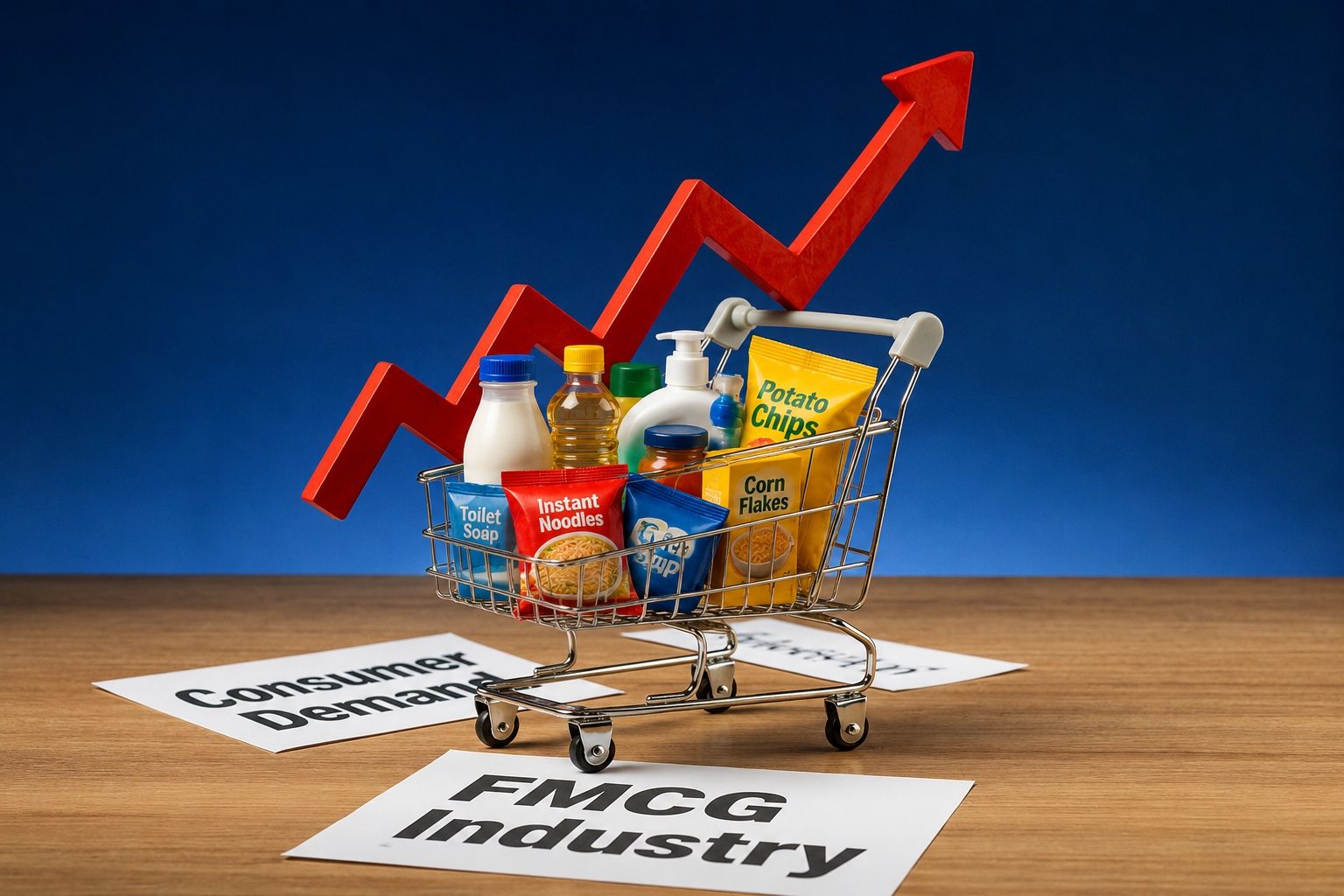
What the FMCG Industry Includes
The FMCG industry covers a wide range of everyday products. Its boundaries can vary between markets and research organizations, but several broad groups are commonly recognized:
- Food and beverages, including packaged foods, snacks, dairy products, bottled drinks, and prepared food products.
- Personal care, including skin care, hair care, oral care, and grooming products.
- Household care, including cleaning products, laundry products, paper goods, and basic home-use products.
- Health and hygiene, including non-prescription everyday wellness and hygiene products where permitted by applicable rules.
- Pet care, including packaged food and routine care products.
These segments can contain thousands of individual products. A single household may purchase products from several FMCG segments every week.
How the FMCG Supply Chain Works
The FMCG supply chain connects several stages. Raw materials are processed into finished products, which are packaged, stored, transported, distributed, and placed through retail or digital channels.
Because many FMCG products have regular consumption patterns, companies need to manage inventory carefully. Too much inventory can create storage and waste challenges, while too little can make products unavailable when consumers need them.
Packaging also plays an important role. It protects products, communicates information, supports transportation, and can influence how easily products are stored or handled.
Importance
Why the FMCG Industry Matters
The FMCG industry is closely connected to everyday life. Households depend on packaged foods, cleaning products, personal care items, and other routine goods. Businesses such as restaurants, offices, schools, and hospitality organizations also use many products from these categories.
The industry also supports a large network of activities, including manufacturing, packaging, logistics, retail, quality control, product development, and inventory management. Changes in consumer behavior can therefore affect multiple parts of the wider economy.
Consumer Behavior and Market Segments
Consumer preferences are not uniform. Age, household size, income patterns, location, culture, dietary preferences, convenience needs, and environmental awareness can influence purchasing decisions.
FMCG market segmentation helps organizations study these differences. Common segmentation approaches include:
- Product category
- Consumer demographics
- Geographic area
- Purchasing frequency
- Retail channel
- Price range
- Lifestyle and usage patterns
For example, a packaged food category may contain products aimed at different dietary preferences, household sizes, and consumption occasions. Studying these groups helps explain why one product category can contain many different product formats.
Key Challenges
The FMCG industry also faces several practical challenges. Raw material availability can fluctuate, transportation networks can be disrupted, and consumer preferences can change quickly.
Other challenges include:
- Managing short product life cycles
- Reducing packaging waste
- Maintaining consistent product quality
- Forecasting demand
- Managing inventory across multiple locations
- Responding to changing regulations
- Balancing affordability with production requirements
These challenges make planning and data analysis important parts of FMCG operations.
Recent Updates
Shift Toward Digital Retail
From 2024 through 2026, the FMCG industry has continued adapting to a more connected retail environment. Online grocery platforms, mobile shopping, digital payments, retail applications, and digital purchasing journeys have changed how consumers discover and purchase everyday products.
This does not mean physical retail has become less relevant. Instead, many markets now have a combination of physical stores, online channels, delivery networks, and digitally supported shopping journeys.
Data and Artificial Intelligence
Artificial intelligence and data analytics are receiving increased attention across the FMCG industry. Businesses can use these technologies to analyze demand patterns, inventory levels, product performance, consumer behavior, and supply chain information.
Potential applications include:
- Demand forecasting
- Inventory planning
- Distribution analysis
- Product assortment analysis
- Automated quality inspection
- Consumer trend analysis
- Production planning
The usefulness of these systems depends on data quality, appropriate models, human oversight, and the specific business situation. Technology does not remove the need for operational judgment.
Sustainability and Packaging
Environmental considerations have become an important part of FMCG planning. Packaging reduction, recyclable materials, reusable formats, efficient transportation, and waste management are receiving greater attention.
Companies and regulators are also examining how packaging is designed and what happens to it after use. This has encouraged research into alternative materials and more efficient packaging systems.
Changing Product Preferences
Consumers are increasingly exposed to products positioned around convenience, nutrition, personal wellness, simpler ingredients, and environmental considerations. The importance of each trend varies by market and product category.
FMCG companies therefore monitor changing preferences rather than relying on a single long-term consumption pattern.
Laws or Policies
The FMCG industry operates within a broad regulatory environment because its products can directly affect consumers, households, and the environment. Requirements vary by product type and jurisdiction, but several regulatory areas are common across many markets.
Product Safety
Food, beverages, cosmetics, household chemicals, and other consumer products can be subject to different safety requirements. Rules may address ingredients, manufacturing practices, contamination controls, product testing, packaging, and handling.
Labeling and Consumer Information
Labels may need to provide information such as ingredients, allergens, nutritional information, quantities, usage instructions, warnings, manufacturer details, or expiration information, depending on the product and applicable rules.
Packaging and Environmental Rules
Packaging regulations can address material composition, labeling, recycling, waste management, and producer responsibilities. Environmental requirements have become increasingly relevant as governments work to reduce unnecessary waste and improve resource recovery.
Advertising and Consumer Protection
Marketing communications are generally expected to be accurate and not misleading. Claims about health, performance, environmental impact, product characteristics, or comparative advantages may be subject to specific requirements.
Because rules differ by product and location, the applicable regulatory framework should always be checked for the relevant market and product category.
Tools and Resources
Several types of tools help people understand and analyze the FMCG industry.
Market research databases can provide information about category sizes, consumer behavior, retail channels, and market trends. Business intelligence platforms can organize inventory, distribution, and consumer data into dashboards.
Useful resources may include:
- Government consumer protection and product safety portals
- Food and product labeling guidance
- Environmental and packaging regulations
- Industry research databases
- Supply chain planning software
- Spreadsheet templates for inventory analysis
- Demand forecasting calculators
- Business intelligence dashboards
- Retail analytics platforms
A simple FMCG analysis can also be created with a spreadsheet. Useful fields may include product category, units produced, units distributed, inventory level, volume, channel, region, and reporting period.
| FMCG area | Common information examined | Example purpose |
|---|---|---|
| Market segment | Product category and consumer group | Understand demand patterns |
| Inventory | Stock levels and product movement | Plan replenishment |
| Distribution | Locations and delivery volumes | Examine supply coverage |
| Retail channel | Physical and digital channels | Compare purchasing patterns |
| Packaging | Material and format | Assess packaging requirements |
| Consumer behavior | Frequency and product preferences | Identify changing habits |
FAQs
What is the FMCG industry?
The FMCG industry includes everyday consumer products that are purchased and used regularly. Major categories include food, beverages, personal care, household products, and selected health and hygiene products.
What are the main FMCG market segments?
Major FMCG market segments include food and beverages, personal care, household care, health and hygiene, and pet care. The exact classification can differ between research organizations and markets.
What are the latest FMCG industry trends?
Recent FMCG industry trends include digital retail, data analytics, artificial intelligence, packaging sustainability, demand for convenience, and changing consumer preferences. The importance of each trend differs by product category and market.
How does technology affect the FMCG industry?
Technology can support demand forecasting, inventory planning, quality monitoring, supply chain analysis, digital retail, and consumer research. Artificial intelligence is increasingly being explored for analyzing large volumes of operational and consumer data.
Why is FMCG market segmentation important?
FMCG market segmentation helps explain differences between consumer groups, product categories, geographic areas, and retail channels. It can make market analysis more structured by separating broad demand into smaller groups.
Conclusion
The FMCG industry covers a broad range of everyday products and depends on coordinated manufacturing, packaging, distribution, and retail activities. Its major market segments include food and beverages, personal care, household care, health and hygiene, and related consumer categories. Recent developments have placed greater attention on digital retail, artificial intelligence, data analysis, packaging sustainability, and changing consumer preferences. Regulations covering product safety, labeling, environmental practices, and consumer protection also shape how the industry operates.